Does a laneway house pay for itself? Payback at three build costs and three rents
A laneway house turns the back of a city lot into a second home: a rental, a place for parents, or a first home for adult kids. In Vancouver and a growing list of other BC municipalities, they're allowed on most lots with lane access. The question owners ask first is simple: how long until it pays for itself?
This guide runs the numbers at three build costs and three rents, then looks at the monthly cash flow if the whole build is borrowed.
What goes into the cost
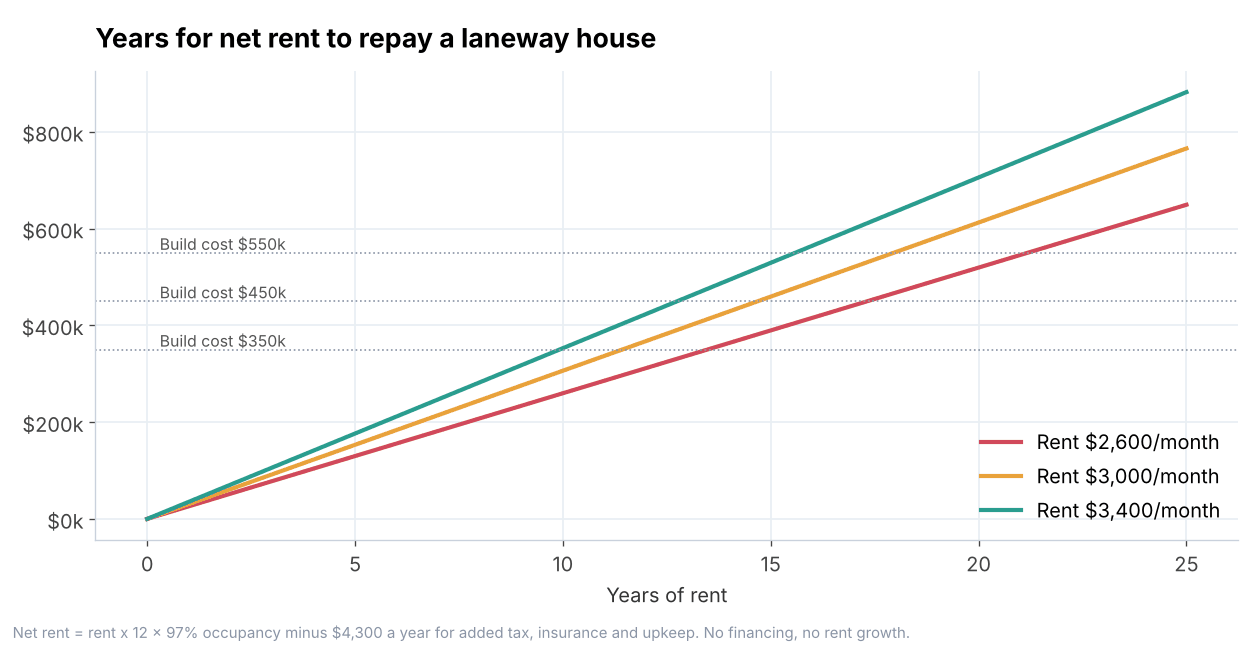
Build costs vary widely with size, design, servicing, and the site. For a two-bedroom laneway house, this guide tests $350,000, $450,000, and $550,000, including design, permits, utility connections, and construction.
Ongoing costs are modest but real. The model allows $4,300 a year for the extra property tax, insurance, and upkeep, and assumes the unit is rented 97% of the time.
Simple payback
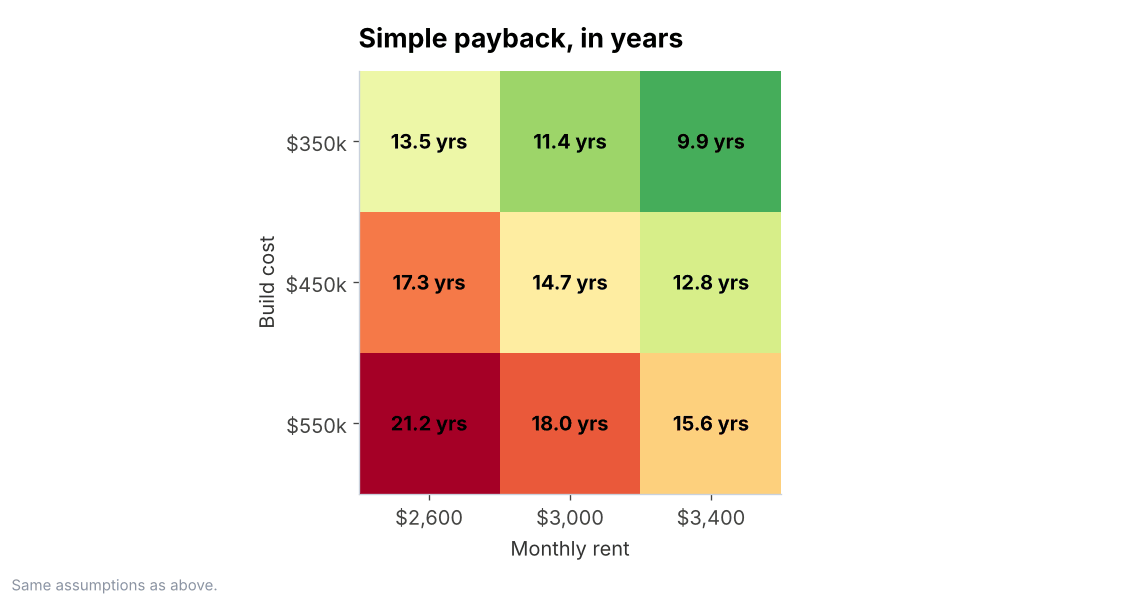
| Build cost | Rent $2,600 | Rent $3,000 | Rent $3,400 |
|---|---|---|---|
| $350,000 | 13.5 years | 11.4 years | 9.9 years |
| $450,000 | 17.3 years | 14.7 years | 12.8 years |
| $550,000 | 21.2 years | 18.0 years | 15.6 years |
These are simple paybacks, with no rent increases and no borrowing. Rents usually rise over time, which shortens them.
If you borrow the whole build
Most owners finance a laneway house with a home equity line, a refinance, or a construction loan.
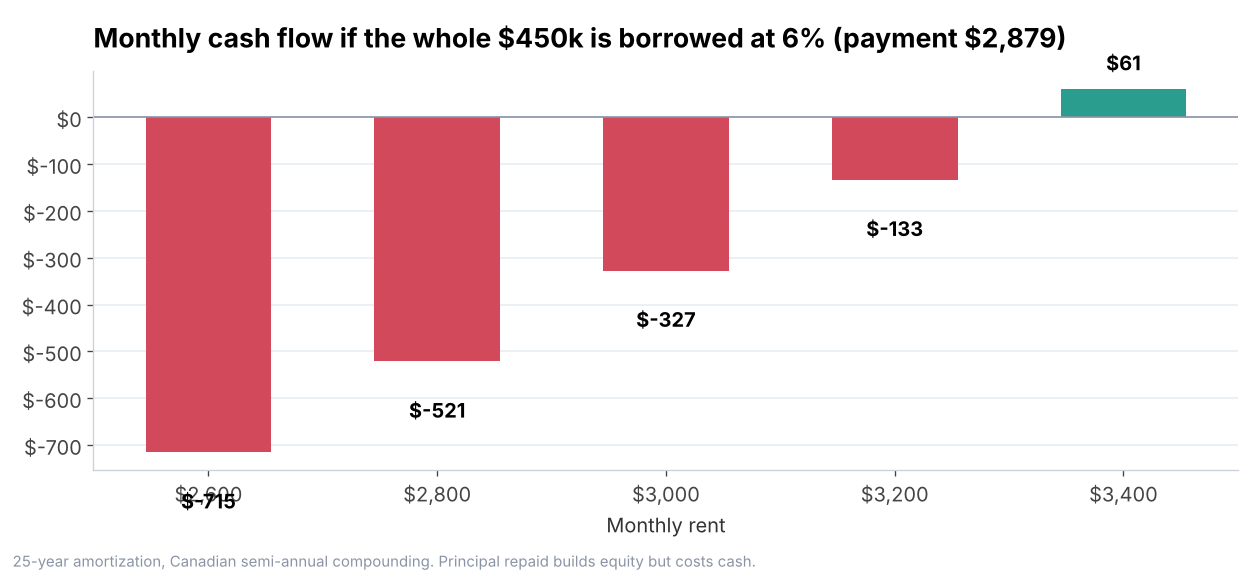
Negative cash flow isn't the whole story: part of each payment is principal, which builds equity. But an owner needs to be able to carry the shortfall for years, or put cash into the build to shrink the loan.
Before you design
- Check your lot. Lane access, lot width, trees, and services decide what's possible. Your city's zoning page lists the current rules.
- Price comparable rents. Look at advertised laneway and garden-suite rents nearby, not condo rents.
- Get two builder quotes that include servicing and permit fees.
- Think about resale. A laneway house adds living space and rental income, but buyers price it differently from the main house.
For a closer look at the rules, costs, and what laneway homes add to Vancouver property values, see EstateBlock's guide to laneway houses in Vancouver.
Sources and further reading
- City of Vancouver: Laneway houses
- Government of British Columbia: Small-scale, multi-unit housing
Hypothetical figures. General information only. Confirm zoning and costs with your municipality and builder.