Drive until you qualify: a cheaper home farther out vs. the cost of the commute
"Drive until you qualify" is how many Metro Vancouver families find a home they can afford. A townhouse in Langley or Maple Ridge can cost hundreds of thousands less than a similar one in Burnaby or Vancouver. But the savings come with a longer commute, paid in fuel, wear on the car, and hours of your life.
This guide puts numbers on that trade for a hypothetical household choosing between a $1.25 million townhouse close in and a $950,000 one farther out.

The money side
With 20% down and a 4.5% mortgage over 25 years, the $300,000 price gap cuts the mortgage payment by about $1,328 a month.
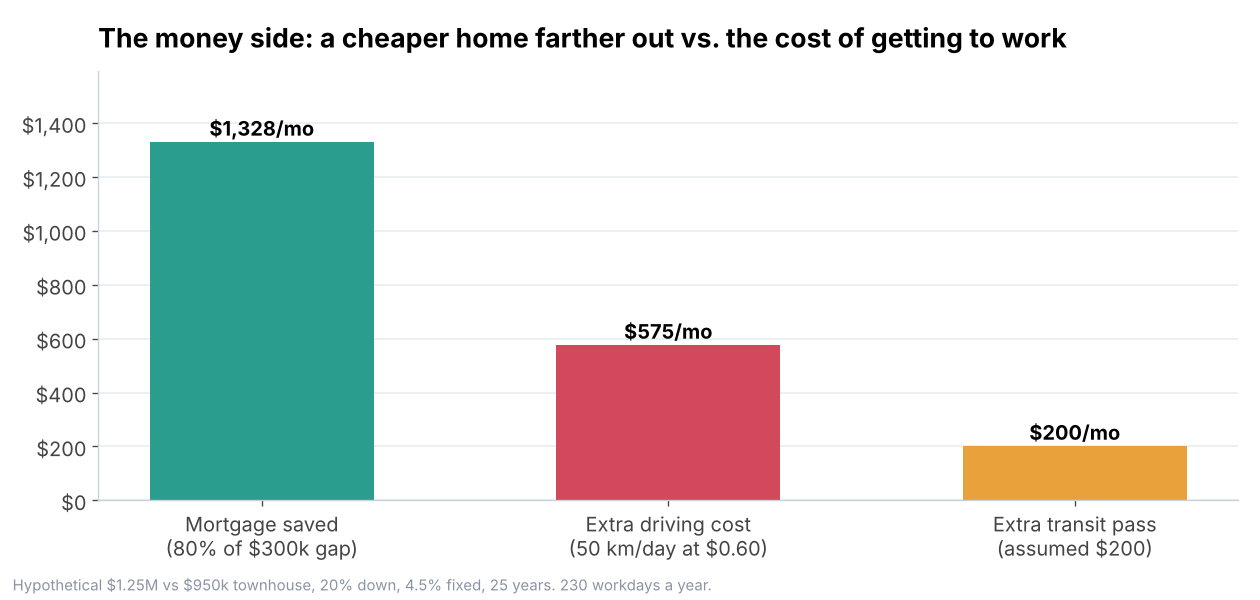
| Monthly | Amount |
|---|---|
| Mortgage saved (80% of $300,000) | $1,328 |
| Extra driving: 50 km a day, 230 days, $0.60 a km | -$575 |
| Net saving if driving | $753 |
| Net saving with a $200 transit pass instead | $1,128 |
The $0.60 a kilometre covers fuel, maintenance, tires, and the extra depreciation of a car driven more. If the move means buying a second car, add that too.
The time side
Twenty-five extra kilometres each way in Metro Vancouver traffic is about 25 minutes, or about 192 hours a year over 230 workdays.
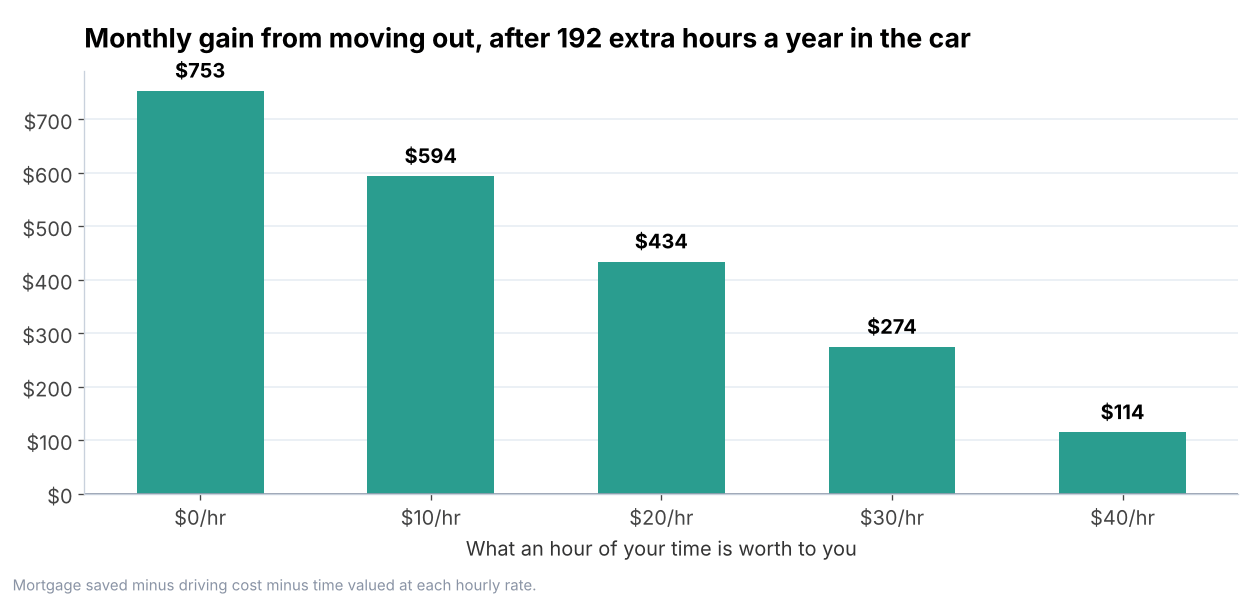
The time cost isn't just a number. It's 192 hours a year not spent with kids, sleeping, or exercising. People who move for a cheaper home often underestimate how much the commute will bother them.
Over ten years
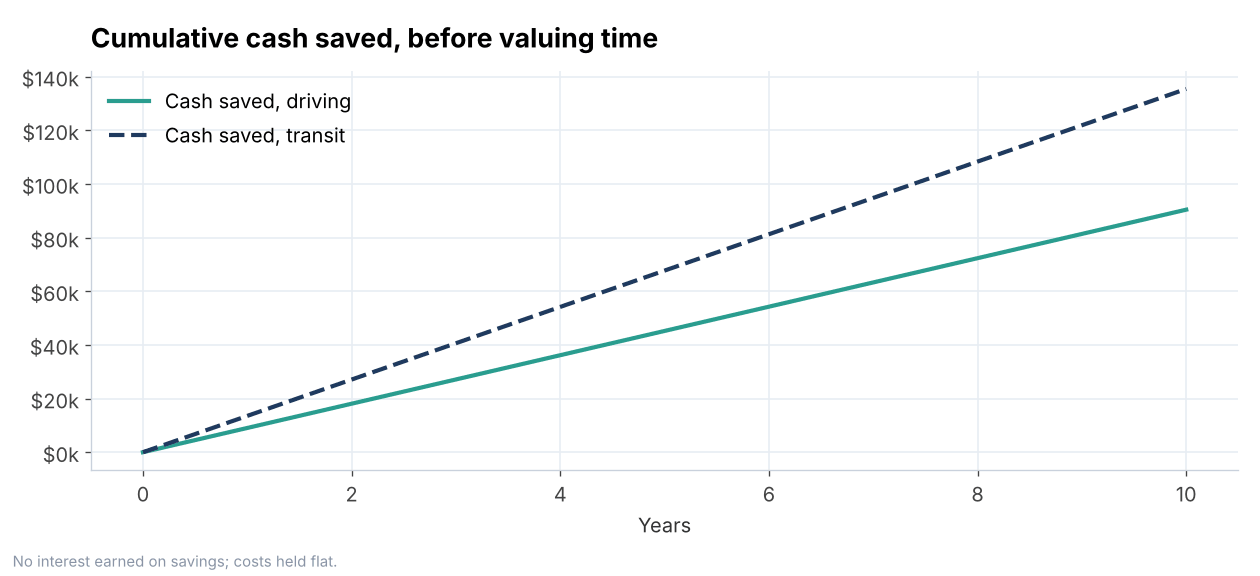

Making the call
- Time the real commute at your actual start time, both ways, for a week before you buy.
- Check transit. A home within walking distance of a SkyTrain or West Coast Express station changes the numbers.
- Compare like with like. Same size, age, and strata fee, so the price gap is really about location.
- Think about schools and family. These often matter more than the money.
EstateBlock's guide to commuting to Vancouver compares commute times and home prices across the region's suburbs.
Sources and further reading
- TransLink: Fares and passes
- Statistics Canada: Commuting data from the census
Hypothetical figures. General information only, not financial advice.